Learning how to study well is one of the most valuable skills a child can develop. Strong study habits do not form overnight. However, when parents and teachers help kids build these habits early, the results can last a lifetime. Children who know how to study are more confident, more focused, and more prepared for bigger academic challenges ahead.
This article shares practical, easy-to-follow study tips for kids. Whether your child is in kindergarten or middle school, these strategies will help them grow into independent and effective learners.
Why Building Study Habits Early Matters
Many parents wonder when to start teaching their children how to study. The answer is simple: the earlier, the better. Young brains are highly adaptable. Therefore, habits formed in early childhood tend to stick around for years.
When kids learn good study habits early, they do not have to scramble or panic before tests. They feel in control. Additionally, they spend less time re-learning material because they retain it better from the start. Strong habits also reduce homework stress for the whole family.
Studies show that consistent routines help children feel safe and focused. A child who knows what to expect each afternoon is far more likely to sit down and study without resistance.
Create a Consistent Study Routine
One of the best study tips for kids is to set a regular time for studying each day. Consistency is key. When studying happens at the same time every day, it becomes automatic, just like brushing teeth or eating dinner.
Choose a time that works for your child’s energy levels. Some kids focus better right after school. Others need a short break first. Therefore, observe your child and pick the slot where they seem most alert and calm.
Keep the routine flexible enough to be realistic, but firm enough to be a habit. Even on lighter homework days, encourage your child to spend some time reviewing or reading. This keeps the brain in “learning mode” every day.
Set Up a Distraction-Free Study Space
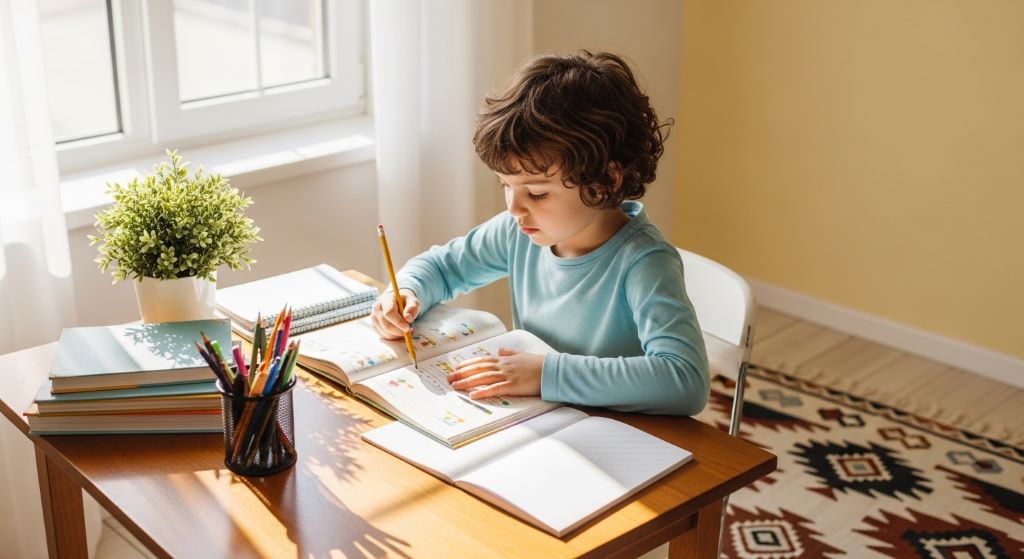
Where a child studies matters just as much as when they study. A good study space should be quiet, well-lit, and organized. It does not have to be a fancy home office. However, it should be free from screens, loud noise, and clutter.
Make sure the desk or table is the right height for the child. Have all the necessary supplies nearby, such as pencils, paper, erasers, and books. When a child has everything they need before they sit down, they are less likely to wander off looking for something.
Additionally, avoid allowing kids to study in bed. Beds are for sleeping, and the brain learns to associate certain spaces with certain activities. A dedicated study spot sends a clear signal: this is where we focus.
Break Study Time Into Small Chunks
Long study sessions can overwhelm children. Fortunately, research supports a smarter approach: short, focused bursts of studying. This method is often called the Pomodoro Technique, though you do not need a fancy name to use it.
Try having your child study for 15 to 20 minutes, then take a 5-minute break. Younger kids may need shorter sessions, such as 10 minutes. After the break, they return to studying refreshed and ready.
During breaks, encourage movement. A quick walk, some stretching, or even a glass of water can reset the brain. Avoid screen time during breaks, as it can make it harder to refocus afterward.
Teach Kids to Prioritize Their Tasks
Not all homework assignments are equal. Some are urgent. Others are longer projects that need to be started early. Teaching children to prioritize is a life skill that pays off far beyond the classroom.
A simple trick is to have your child write down all their tasks at the start of each study session. Then, ask them to rank the tasks from most to least urgent. This helps them avoid spending all their energy on easy tasks while leaving difficult ones for last.
Additionally, large projects can feel scary to a child. Therefore, help them break big assignments into smaller steps. Instead of “write a report,” the steps might be: pick a topic, find three sources, write an outline, write one paragraph at a time. Smaller steps feel manageable and keep anxiety low.
Use Active Learning Strategies
Passively reading a textbook is one of the least effective ways to study. However, active learning strategies help children truly absorb and remember what they study.
Here are some simple active learning methods for kids:
- Teach it back: Ask your child to explain what they just learned to you, a sibling, or even a stuffed animal. If they can teach it, they truly understand it.
- Use flashcards: Flashcards are great for vocabulary, math facts, and science terms. They also make review sessions feel like a game.
- Draw it out: Many kids learn better when they can visualize information. Encourage them to draw diagrams, timelines, or pictures related to the topic.
- Ask questions: Instead of just reading, ask your child to pause and ask themselves, “What was this section about?” This simple habit improves memory.
Active strategies keep the brain engaged. Therefore, children who use them retain more and feel more prepared for tests.

Encourage Reading Every Day
Reading is the foundation of all learning. Children who read regularly have stronger vocabularies, better comprehension skills, and greater general knowledge. All of these advantages help them across every subject in school.
Set aside time for daily reading outside of homework. It does not have to be a textbook. Let your child choose books they enjoy. Additionally, reading for fun builds a positive relationship with learning overall.
For younger children, reading together is a wonderful habit. Ask questions about the story, predict what might happen next, and talk about new words. These simple conversations build critical thinking skills that support stronger study habits over time.
Limit Screen Time Before and During Study
Screens are one of the biggest enemies of focused study. Social media, videos, and games compete directly for a child’s attention. However, many parents underestimate how much even a quick scroll can disrupt concentration.
The brain needs time to switch from entertainment mode to learning mode. Therefore, encourage at least a 15-minute screen-free period before study time begins. This simple buffer helps the mind settle and prepare to focus.
During study sessions, phones should be in another room if possible. Notifications are powerful distractions. Research shows that even having a phone visible on the desk reduces a person’s ability to concentrate, even if they do not check it.
Celebrate Effort, Not Just Results
How parents respond to a child’s academic performance has a huge impact on their motivation. Children who are praised only for getting good grades begin to fear mistakes. However, children who are praised for effort learn to embrace challenges.
When your child finishes a tough assignment, celebrate the work they put in. Say things like, “I noticed you kept trying even when it was hard,” or “You stayed focused for the whole session today.” This kind of praise builds a growth mindset, the belief that skills improve with practice.
Additionally, avoid reacting harshly to a bad grade. Instead, treat mistakes as learning opportunities. Ask your child what they found difficult and how they might study differently next time.
Stay Involved Without Taking Over
Parental involvement is important, but there is a fine line between supporting and doing the work for your child. Children need to develop independence. Therefore, the goal is to guide, not rescue.
Check in at the start and end of study sessions. Ask how it went. Be available for questions, but encourage your child to try on their own first. This approach builds confidence and problem-solving skills.
Additionally, stay in touch with teachers. If your child is consistently struggling, early communication allows for support before the problem grows. Teachers appreciate engaged parents and can offer helpful strategies tailored to your child.
Conclusion
Building strong study habits early gives children the tools they need to succeed throughout their academic journey and beyond. The best study tips for kids combine routine, environment, smart strategies, and emotional support. By setting a consistent schedule, creating a focused workspace, using active learning methods, and celebrating effort over perfection, parents can help their children become confident, independent learners.
Additionally, small consistent steps matter far more than occasional bursts of cramming. Therefore, start with just one or two of these tips and build from there. Over time, these habits will feel natural, and your child will thank you for it.
Frequently Asked Questions
At what age should kids start developing study habits?
Children can begin learning basic study routines as early as age 5 or 6. Start simple with short reading sessions and tidy workspaces. As they grow, you can gradually introduce more structured techniques.
How long should a child study each day?
It depends on age. Children aged 6 to 8 may need only 15 to 30 minutes of focused study. Older kids aged 9 to 12 can typically handle 30 to 60 minutes, broken into shorter blocks with breaks in between.
What should I do if my child refuses to study?
Stay calm and consistent. Avoid power struggles. Instead, offer limited choices, such as asking whether they want to start with math or reading. Keeping sessions short and celebrating small wins can also reduce resistance over time.
Are flashcards really effective for kids?
Yes, flashcards are a proven tool for memory and recall. They work especially well for vocabulary, multiplication tables, and factual information. Making them together with your child also adds a fun, hands-on element to studying.
How can I help my child stay organized with schoolwork?
Teach your child to use a planner or assignment notebook. Spend a few minutes each evening reviewing what is due the next day. Color-coded folders for different subjects can also help younger kids sort and track their materials easily.
Related Topics:
Self-Advocacy Skills for College Students: Empowering Your Academic Journey
How to Stay Positive During Challenging Studies: A Comprehensive Guide to Thriving Academically