Learning does not have to follow a single path. Many people find that traditional education systems do not fully match the way they think, question, or explore ideas. Independent thinkers often feel restless in rigid structures. They ask deeper questions. They want to learn on their own terms.
A personal education plan gives you the freedom to shape your own learning journey. It helps you set clear goals, choose meaningful resources, and track your progress over time. However, building one from scratch can feel overwhelming. Therefore, this guide will walk you through every step of the process in a simple, practical way.
Whether you are a student, a working adult, or a lifelong learner, this plan can work for you. All it takes is intention, curiosity, and a willingness to take ownership of your education.
What Is a Personal Education Plan?
A personal education plan, often called a PEP, is a customized roadmap for your own learning. Unlike a school curriculum, it is not designed by someone else. You create it yourself based on your interests, goals, and learning style.
The idea is simple. You decide what you want to learn, why it matters to you, and how you will go about learning it. Additionally, you set timelines and ways to measure your progress. This keeps you accountable and motivated throughout the process.
Personal education plans have become increasingly popular among homeschoolers, autodidacts, and professionals seeking career growth. However, they are not limited to any specific group. Anyone who wants to take control of their learning can benefit from building one.
Why Independent Thinkers Need a Different Approach
Independent thinkers do not always thrive in environments that reward memorization and passive listening. They prefer to question assumptions, explore multiple perspectives, and connect ideas across different subjects. This is a strength, but it can also make standard education feel limiting.
Traditional education often follows a one-size-fits-all model. Lessons are paced for the average student. Topics are taught in a fixed sequence. Independent thinkers may find this frustrating because they want to go deeper into topics that excite them and move quickly past those that do not.
A personal education plan solves this problem. It allows you to follow your curiosity. It gives you permission to learn at your own pace. Furthermore, it lets you combine subjects in unconventional ways, which often leads to more creative and original thinking.
Therefore, building a personal education plan is not just about learning more efficiently. It is about honoring the way your mind naturally works.
Step One: Define Your Learning Goals
Every strong personal education plan starts with clear goals. Before you choose any resources or schedule any study sessions, you need to know what you are working toward. Vague goals lead to vague results. Specific goals give your learning direction and purpose.
Start by asking yourself a few key questions. What do you want to know more about? What skills do you wish you had? Are you learning for personal growth, a career change, creative projects, or pure curiosity? Write your answers down honestly.
Once you have a general sense of direction, break your goals into two types.
- Long-term goals: These are bigger ambitions that may take months or years to achieve, such as mastering a new language, understanding philosophy, or learning to code.
- Short-term goals: These are smaller, achievable targets that support your long-term vision, such as finishing a book, completing an online course, or writing one essay per week.
Additionally, make sure your goals are specific and measurable. Instead of saying you want to learn more about history, say you want to read five books on the history of the Roman Empire over the next three months. This gives you something concrete to aim for.
Step Two: Understand Your Learning Style
Not everyone learns the same way. Some people absorb information best by reading. Others prefer listening to lectures, watching videos, or working through hands-on projects. Understanding your learning style helps you choose resources that truly work for you.
There are several common learning styles to consider. Visual learners benefit from diagrams, charts, and written text. Auditory learners do well with podcasts, lectures, and discussions. Kinesthetic learners prefer activities, experiments, and real-world application. Many people are a blend of two or more styles.
However, learning style alone is not enough. You should also think about your ideal learning environment. Do you focus best in the morning or at night? Do you prefer long, deep study sessions or short, frequent ones? Do you learn better alone or in conversation with others?
Knowing these things about yourself helps you design a plan that fits your life. Therefore, take some time to reflect on past learning experiences. Think about when you felt most engaged and when you felt bored or stuck. Those patterns will tell you a lot.
Step Three: Choose Your Subjects and Topics
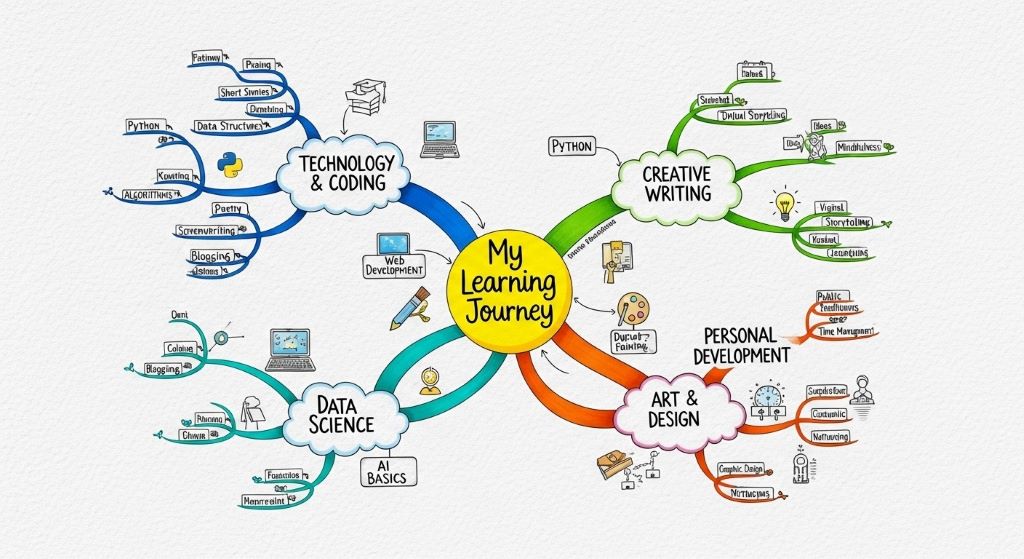
Once you know your goals and your learning style, it is time to decide what you want to study. This is one of the most exciting parts of building a personal education plan. You are not limited to any syllabus or required reading list. The world of knowledge is open to you.
Start by listing every subject or topic that genuinely interests you. Do not filter yourself at this stage. Write everything down, even if it seems unrelated or impractical. Independent thinkers often make their best discoveries at the intersections of different fields.
Next, prioritize your list. You cannot study everything at once. Therefore, pick two or three main areas of focus for the next few months. You can always rotate subjects as you grow and your interests evolve.
Some Popular Subject Areas for Independent Learners
- Philosophy and critical thinking
- History and political theory
- Science, technology, and mathematics
- Economics and personal finance
- Literature, writing, and rhetoric
- Psychology and human behavior
- Art, music, and creative expression
Additionally, do not overlook practical skills. Learning how to write clearly, speak persuasively, or manage your time effectively will support every other area of your education. These foundational skills are often the most valuable.
Step Four: Select Your Learning Resources
The quality of your education depends heavily on the quality of your resources. Fortunately, independent learners today have access to more high-quality material than ever before. The challenge is not finding resources but choosing the right ones for your goals and style.
Books and Reading
Books remain one of the most powerful tools for deep learning. Look for primary sources and classic texts alongside modern commentary. Reading widely across different genres and disciplines builds a broad and flexible mind. Additionally, keeping a reading journal helps you process and retain what you learn.
Online Courses and Platforms
Platforms such as Coursera, edX, Khan Academy, and Masterclass offer structured courses on almost every subject imaginable. These are useful when you want guided instruction with clear milestones. However, use them selectively. Not every course deserves your full attention. Preview the content first and commit only to what aligns with your goals.
Podcasts, Documentaries, and Lectures
Audio and video content is excellent for learning on the go or exploring a topic before diving into books. Many universities offer free lecture series online. Podcasts cover everything from history and science to philosophy and entrepreneurship. These formats are ideal for auditory learners and busy schedules.
Mentors, Communities, and Conversations
Learning in isolation has limits. Connecting with others who share your interests accelerates growth in powerful ways. Seek out mentors, join online communities, attend local events, or start a book club. Conversations challenge your thinking, expose you to new perspectives, and help you articulate what you know.
Step Five: Build Your Learning Schedule
A personal education plan is only effective if you actually follow it. That requires a realistic and sustainable schedule. Many independent learners make the mistake of planning too ambitiously at first. They burn out within a few weeks and abandon the plan entirely.
Start small. Even 30 minutes of focused learning each day adds up to over 180 hours in a year. That is enough time to read a dozen books, complete two or three courses, and develop a meaningful new skill.
When building your schedule, consider these principles.
- Consistency beats intensity. Learning a little every day is more effective than cramming for hours once a week.
- Protect your peak hours. Schedule your most demanding learning during the time of day when you are most alert and focused.
- Include review time. Revisiting material you have already covered strengthens long-term retention.
- Build in rest. Your brain needs time to consolidate new information. Days off are not wasted time.
Additionally, use a simple planning tool to map out your week. A paper planner, a digital calendar, or a spreadsheet all work well. The key is to make your learning visible and planned rather than left to chance.
Step Six: Track Your Progress and Reflect
One of the most important habits of successful independent learners is regular reflection. Without feedback, it is easy to keep busy without actually growing. Tracking your progress helps you see how far you have come and identify areas where you need to adjust.
Set aside time each week to review what you have learned. Ask yourself what went well and what felt difficult. Consider whether your current resources and methods are actually working. If something is not serving you, change it. You are in charge of this plan.
Keep a learning journal or log. Record key insights, questions that arise, and connections you notice between different subjects. This practice deepens your understanding and creates a personal record of your intellectual growth.
Furthermore, revisit your goals every month or two. Goals evolve as you learn more about yourself and the world. A personal education plan should be a living document, not a rigid contract. Adjust it freely as your curiosity leads you in new directions.
Common Challenges and How to Overcome Them
Building and maintaining a personal education plan comes with real challenges. Knowing them in advance helps you prepare and respond wisely rather than giving up when things get hard.
Lack of Motivation
Motivation naturally fluctuates. There will be days when you do not feel like studying at all. On those days, rely on your schedule and your sense of purpose rather than waiting for inspiration. Additionally, reconnecting with your original goals can reignite your drive. Remind yourself why you started.
Information Overload
The abundance of available knowledge can feel paralyzing. You may start many things but finish few of them. To overcome this, focus on depth over breadth. Commit to finishing what you start before moving on to the next topic. Going deep on a few subjects builds more lasting knowledge than skimming many.
Self-Doubt
Independent learners sometimes question whether self-directed study is as valid as formal education. It is. Some of history’s greatest thinkers, inventors, and leaders were largely self-taught. However, self-doubt is normal. Acknowledge it, and then return to your work. Action is the best remedy for doubt.
Isolation
Learning alone for long periods can feel isolating. Therefore, make connection a regular part of your plan. Share what you are learning with others. Find communities of like-minded learners. Teaching someone else what you have learned is also one of the most effective ways to deepen your own understanding.
Conclusion
Building a personal education plan is one of the most empowering things an independent thinker can do. It puts you in the driver’s seat of your own intellectual life. Instead of waiting for someone else to teach you, you take responsibility for your own growth.
The steps are straightforward. Begin by defining clear goals. Understand how you learn best. Choose subjects that genuinely excite you. Select high-quality resources that match your style. Build a realistic schedule and follow it consistently. Track your progress and reflect regularly. Adjust your plan as you grow.
However, the most important thing is simply to begin. A perfect plan that never starts is worth nothing. An imperfect plan that you follow every day will change your life. Therefore, take the first step today. Pick one goal, find one resource, and set aside 30 minutes tomorrow morning. That is all it takes to get started.
Your education belongs to you. Build it with intention, pursue it with curiosity, and never stop questioning the world around you.
Frequently Asked Questions
1. What is the difference between a personal education plan and a school curriculum?
A school curriculum is designed by educators or institutions and follows a fixed structure for all students. A personal education plan, on the other hand, is created by the learner. It is fully customized to your goals, interests, and learning style. Additionally, it is flexible and can be changed at any time, unlike a formal curriculum.
2. How long does it take to build a personal education plan?
The initial setup does not take long. Most people can draft a basic plan in one to two hours. However, refining it is an ongoing process. As you learn more and your goals evolve, your plan will grow and change with you. Therefore, think of it as a living document rather than a one-time task.
3. Can a personal education plan replace formal education?
For some people and some goals, yes. Many successful professionals and creatives are largely self-taught. However, formal education still offers certain advantages such as credentials, structured mentorship, and peer networks. A personal education plan can complement formal education or serve as a powerful alternative, depending on your specific needs and ambitions.
4. How do I stay motivated when following a self-directed learning plan?
Motivation is easier to maintain when your goals are personally meaningful and your learning feels enjoyable. Connect your studies to real projects or problems you care about. Track your progress visibly so you can see growth over time. Additionally, sharing your journey with a friend or online community adds accountability and encouragement.
5. What are the best free resources for independent learners?
There are many excellent free resources available today. Khan Academy offers structured lessons in math, science, and humanities. MIT OpenCourseWare provides free university-level course materials. Project Gutenberg offers thousands of classic books at no cost. YouTube hosts lectures, tutorials, and documentaries on nearly every topic. Furthermore, public libraries remain one of the most valuable and underused resources for independent learners everywhere.
Related Topics:
Self-Advocacy Skills for College Students: Empowering Your Academic Journey
How to Support Students with ADHD: Unlocking Potential Through Empathy and Strategy