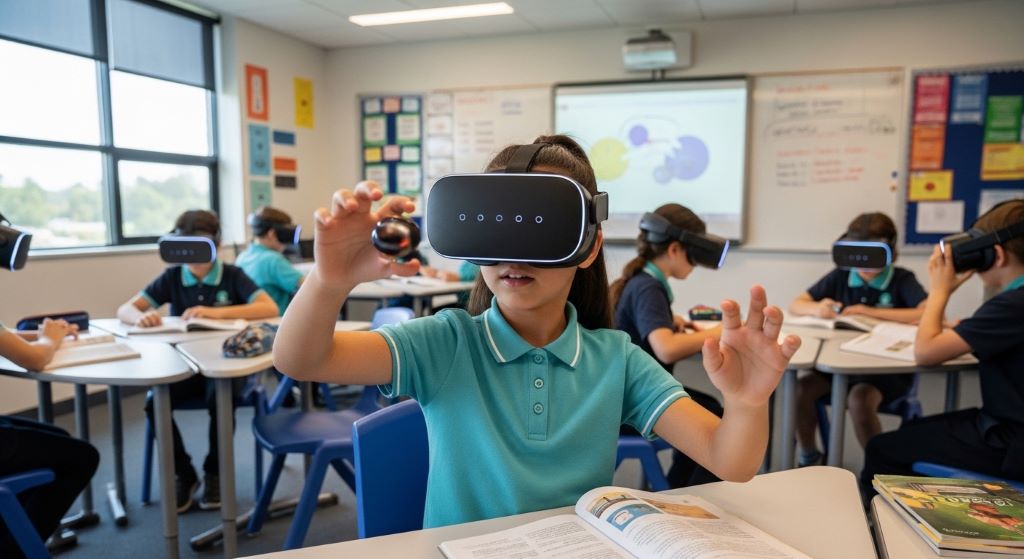
Learning is changing fast. Traditional lectures no longer hold attention the way they once did. Students and employees alike are looking for experiences that feel real, engaging, and worth their time. Immersive learning methods answer that call. They place learners inside the experience rather than outside it, turning passive listening into active discovery.
This article walks you through how to create interactive lessons using immersive learning methods. You will find practical steps, proven strategies, and clear examples to help you build lessons that people actually remember.
What Is Immersive Learning and Why Does It Matter
Immersive learning is an approach that surrounds learners with rich, realistic, and engaging content. It uses environments, scenarios, and activities that demand participation. Instead of watching a video or reading a slide, the learner makes decisions, solves problems, and experiences consequences.
Research consistently shows that people remember about 10% of what they read but up to 75% of what they practice by doing. This gap is enormous. Immersive learning closes it by making doing the central part of the lesson.
Additionally, immersive learning builds emotional connection. When a learner feels genuinely involved in a story or scenario, their brain processes the information more deeply. That deeper processing leads to better retention and easier recall later on.
Step One: Define Your Learning Objectives Clearly
Before you design anything, you need to know what success looks like. Ask yourself what the learner should be able to do, think, or feel after completing this lesson. Keep your objectives specific and measurable.
For example, instead of saying “understand customer service,” write “respond to a frustrated customer using three de-escalation techniques.” This kind of precision guides every design decision that follows.
Clear objectives also help you choose the right immersive method. A simulation works well for skill practice. A branching scenario works well for decision-making. A virtual environment works well for spatial or procedural learning. Therefore, your objectives are not just a formality. They are your compass.
Step Two: Choose the Right Immersive Learning Format
There are several formats to consider. Each has its strengths, and the best choice depends on your audience, your content, and your available resources.
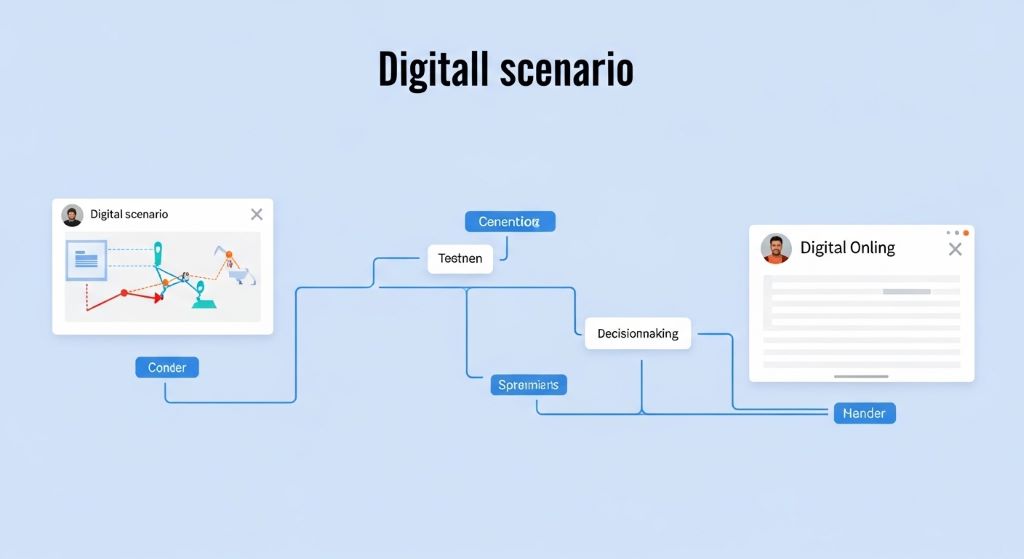
Branching scenarios let learners make choices and see the results of those choices unfold. They work well for soft skills, ethics training, and customer interaction. Each decision leads to a new path, which makes the learner feel genuinely in control.
Simulations replicate real-world tasks in a safe environment. Medical training, technical procedures, and safety drills are great fits for simulations. Learners can make mistakes without real-world consequences, which encourages risk-taking and deeper learning.
Role-play activities, even in non-digital settings, immerse learners in a perspective other than their own. They work especially well in group settings and build empathy alongside skill.
Game-based learning adds challenge, reward, and competition to the experience. Points, badges, leaderboards, and time pressure create a sense of stakes that keeps learners engaged.
Virtual reality and augmented reality represent the frontier of immersive learning. However, they require more investment. If your budget allows, they offer unmatched levels of presence and realism.
Step Three: Build a Story Around Your Content
Every great immersive experience has a story at its heart. Stories give learners a reason to care. They provide context, conflict, and stakes. Without a story, even the most technically impressive simulation can feel hollow.
Start with a character your learners can relate to. Give that character a goal and a problem. Then let the learner help solve it. This structure is simple, but it is powerful.
For example, a lesson on data privacy might follow a mid-level manager named Dana who receives a suspicious email. The learner, playing the role of Dana’s IT advisor, must guide her through the right steps. Each choice leads to a different outcome, and the story only ends well if the learner applies the right knowledge.
This kind of storytelling transforms dry content into something memorable. Additionally, it creates emotional investment, which is one of the strongest drivers of learning.
Step Four: Design for Active Participation
Immersive learning fails when learners become passive. Your design must demand involvement at every stage. Remove long blocks of text that the learner simply reads through. Replace them with moments that require a response.
Here are some effective ways to build active participation into your lessons:
- Ask the learner to make a decision before revealing the answer or outcome.
- Use drag-and-drop activities to sort, rank, or organize information.
- Include short reflection prompts that ask learners to connect new ideas to their own experience.
- Add timed challenges that create urgency and focus.
- Use embedded quizzes that feel like natural checkpoints rather than formal tests.
Therefore, think of every screen, every moment, and every interaction as an opportunity to ask something of the learner rather than simply give them something to absorb.
Step Five: Use Feedback as a Teaching Tool
In immersive learning, feedback is not just a grade. It is a continuation of the lesson. When a learner makes a wrong choice in a scenario, the feedback should not simply say “incorrect.” It should show what happened as a result of that choice and why a different approach would work better.
Good feedback is immediate, specific, and non-punishing. It guides without humiliating. It corrects without discouraging. This kind of feedback keeps learners in the experience rather than pulling them out of it.
Additionally, consider layered feedback. Give a quick response right after a choice, then offer a deeper explanation afterward. This mirrors how real life works. You see the immediate result of a decision first, and then you reflect on the deeper lesson.
Step Six: Incorporate Visuals and Sensory Details
The environment you create, whether digital or physical, shapes how the learner feels. Rich visuals, authentic sounds, and realistic details all contribute to the sense of immersion. They tell the brain that what is happening matters.
You do not need expensive tools to achieve this. Even well-chosen photographs, short video clips, and ambient sound can make a scenario feel real. The goal is to reduce the gap between the learning experience and the real-world situation you are preparing learners for.
However, avoid overloading learners with unnecessary detail. Every visual and sensory element should serve the learning objective. If it distracts rather than supports, cut it.
Step Seven: Test, Gather Feedback, and Improve
No lesson is perfect on the first attempt. Run your immersive lesson with a small group before a full launch. Watch how they interact with it. Where do they hesitate? Where do they disengage? Where do they seem confused or frustrated?
Gather both quantitative data, like completion rates and quiz scores, and qualitative feedback through interviews or short surveys. Both types of information tell you something different and valuable.
Then make adjustments. Immersive learning is an iterative process. The best experiences are built through repeated cycles of design, testing, and refinement. Therefore, plan for iteration from the very beginning rather than treating launch as the finish line.
Real-World Examples of Immersive Learning Done Well
Several industries have already embraced immersive learning with impressive results.
In healthcare, nurses and doctors use high-fidelity simulations to practice emergency procedures. These environments replicate the pressure and complexity of real situations. As a result, learners arrive at their first real emergency with far more confidence and competence.
In corporate training, companies use branching scenarios to prepare sales teams for difficult customer conversations. The learner practices handling objections, navigating emotions, and closing deals without the risk of losing an actual client.
In education, teachers use game-based platforms to make math and language learning feel like play. Students earn points, unlock levels, and compete with classmates, all while building core skills.
These examples show that immersive learning works across age groups, industries, and content types.
Common Mistakes to Avoid
Even well-intentioned designers make mistakes with immersive learning. Here are a few to watch for.
Do not prioritize aesthetics over substance. A beautiful environment with weak content will not teach anything. The experience must be grounded in solid learning design.
Avoid making scenarios too easy or too forgiving. If every choice leads to the same positive outcome, the learner stops thinking critically. Challenge is essential.
Do not neglect accessibility. Immersive experiences should work for learners with visual, auditory, or motor differences. Build inclusivity into the design from the start, not as an afterthought.
Finally, do not skip the debrief. After an immersive experience, give learners time to reflect, discuss, and consolidate what they learned. The experience itself is powerful, but guided reflection multiplies its impact.
Conclusion
Creating interactive lessons using immersive learning methods is one of the most effective ways to improve learning outcomes. The process begins with clear objectives and moves through choosing the right format, building a compelling story, designing for active participation, and using feedback as a teaching tool.
Immersive learning works because it mirrors how people naturally learn: through experience, through consequence, and through reflection. When you design with these principles in mind, you create lessons that learners not only complete but carry with them long after the session ends.
Start small if you need to. A single well-designed branching scenario can transform how your audience engages with a topic. From there, you can grow your approach as your confidence and resources expand. The most important step is the first one.
Frequently Asked Questions
What is the difference between immersive learning and traditional e-learning?
Traditional e-learning often involves reading content and answering quiz questions. Immersive learning places the learner inside a scenario or environment where they must make decisions and experience outcomes. It is more engaging and typically leads to stronger retention.
Do I need advanced technology to create immersive lessons?
No. While virtual reality and augmented reality offer powerful experiences, you can create highly effective immersive lessons using branching scenarios, storytelling, role-play, and game elements with standard authoring tools or even simple presentation software.
How long should an immersive lesson be?
Most immersive lessons work best in focused segments of 10 to 20 minutes. Longer experiences can cause fatigue and reduce engagement. If your content requires more time, break it into shorter modules with clear stopping points.
How do I measure the effectiveness of an immersive lesson?
Track completion rates, decision patterns, quiz performance, and time spent on key interactions. Combine this with learner feedback surveys and, where possible, on-the-job performance metrics to assess real-world impact.
Can immersive learning methods work for all age groups?
Yes. The core principles of story, choice, and feedback resonate across age groups. However, the format, complexity, and tone should be adjusted to suit the audience. What works for a corporate team may need simplification for younger learners, and vice versa.
Related Topics:
How to Support Students with ADHD: Unlocking Potential Through Empathy and Strategy
How to Stay Positive During Challenging Studies: A Comprehensive Guide to Thriving Academically